CS Internship Guide #4: A Model Conversation With a Recruiter

Part of the CS Internship Guide


If you already know how to talk to a recruiter, stop right here. If you’ve never been to a career fair before, read on.


Today’s entry features a student, Michael, walking up to a recruiter for XYZ Co. at a career fair. Michael understands that recruiters are people, too, so he doesn’t feel nervous.

Michael: Hi, I’m Michael.

Recruiter: Nice to meet you, Michael.

[They firmly shake hands]

Michael: I’m a second-year CS major and I’m looking for an internship next summer. Is XYZ Co. looking for interns?

// Since Michael did his research, he already knows XYZ Co. is looking for interns. He asked the question to drive the conversation.

Recruiter: Yes, we are! Can I see your resume?

Michael: Sure.

[Michael takes a resume out of his padfolio]

Recruiter: [Scans resume] So, tell me about yourself.

Michael: As you know, I’m a CS student at ABC University. I’ve taken a ton of programming classes here, including data structures, computer architecture, and operating systems. My favorite language is Java, but I consider myself a fast learner when I have to dive into a new language.

// Like Michael, you don’t need to talk about your non-technical hobbies. The exception is when you’re on the ultimate Frisbee team and the company makes sports-related software.

Recruiter: Cool. [Continues looking at resume] Tell me about this Java game you made.

Michael: That was a project I did just for fun. Two friends and I had this idea for a fun little 2D game, so we collaborated on the design and implementation.

[Michael says a few more sentences about the technical details.]

Recruiter: What was your biggest challenge coding the project?

// This is a very common question! Another common question is “Why do you want to work at XYZ Co.?”

Michael: So we had this one loop…

[Michael explains the problem and solution clearly and concisely.]

Recruiter: Sounds like an awesome project. Is the source code online?

Michael: Yes, you can see the code on GitHub. My GitHub URL is on my resume.

Recruiter: Great! Do you have any questions for me?

// Always ask at least one question, and make sure it’s relevant

Michael: What’s the company culture like?

Recruiter: Personally, I love it. We have a very flat organization. You can walk into the CEO’s office and ask him a question any time. For dress code, you can wear basically anything–I wear shorts and flip flops. And I’m sure you’ll be happy to know the office kitchen always has free snacks and coffee.

Michael: Sounds awesome. Do you have any more questions for me?

Recruiter: Nope. It was great talking with you, Michael. I’ll send you a follow-up email in a few days.

Michael: Thank you!


Do you think Michael has a good chance of getting an interview? Would you have done anything differently? Let us know in the comments.

Posted in CS Internship Guide, Software | Tagged , , , , , , , | 5 Comments

CS Internship Guide #3: Five things you need to do before the career fair

Part of the CS Internship Guide


Preparing for the Career Fair

Most internship applications can be completed online before the career fair.

Most colleges hold a career fair every year (or every semester). Even if you don’t think you can get an internship, you should still visit the career fair. And whether you’re looking for an internship or a post-graduation job, you should prepare accordingly.

So start early. In fact, you can do almost all of these five things right now.

1. Research companies to talk with

If you take one thing away from this post, it should be this: Find a list of the companies at the career fair and pick 10 to 15 to talk with first. Time at a career fair can fly by faster than you expect. I like to make a list of all the companies in attendance and categorize them as “Top 15,” “Maybe if I have time,” and “meh.”

2. Create a profile on LinkedIn

If you don’t have a LinkedIn profile, create one right now. Recruiters might ask you to connect on LinkedIn so they can follow up later.

3. Print off copies of your resume

This is non-optional. Make sure your resume is up-to-date (or craft a new one if needed). Regular white paper is fine–just make sure it looks nice.

4. Practice talking to recruiters

When you talk to a recruiter at a career fair, the conversations usually follow a similar pattern. Ask your friends (who have gone to career fairs before) to pretend to be a recruiter, or visit your college’s career services office. A great conversation can make up for a lack of experience or an imperfect GPA.

5. Get ready for the fair

Though 99% of you already know this, I’ll mention it just in case: Know how to get to the career fair before the day it’s held. Also, make sure you follow the career fair’s dress code. Someone I know forgot to bring his dress shoes to college and had to scramble to find a pair.

If you do these five things before the career fair, you’ll have a better chance of landing an internship interview. Once again, the most important thing is to make a list of your top 10 to 15 companies. And even if you don’t think you have a chance of getting an internship, go anyway. You might find the event to be unexpectedly influential for your future career.

What do you recommend students do before the career fair?

Posted in CS Internship Guide, Software | Tagged , , , , , , | 4 Comments

CS Internship Guide #2: Does GPA Matter?

Part of the CS Internship Guide


Recruiters and GPA

When it comes to getting a computer science internship, does GPA matter?

There’s no “magic number” that grants you an internship. Most companies use grade point averages to disqualify unmotivated* candidates (“Job requirements: GPA of 2.0 or higher”). Almost every company uses GPA as one factor in the interview process (a perfect 4.0 looks nicer than a 2.5).

IMG_0009

Academia is different from industry, but almost every recruiter looks at GPA.

My advice? GPA gets you the interview, but personal projects get you the job. Plenty of students have a 3.0, but fewer have impressive personal projects.

What if your GPA could use improvement?

Though a 3.0 is “good enough” for most companies, students with less-than-stellar GPAs can still find internships. If you feel like your grades could be better, there are a few things you can do:

  1. Apply anyway. Even if a company requires a certain average, a great conversation at a career fair can get you in the door. Furthermore, startups tend to care less about GPA than large companies.
  2. Show recruiters you have software skills. When talking to recruiters, mention relevant technologies you’ve used (programming languages, frameworks) and projects you’ve created.
  3. Work to make it better. You don’t have to spent 100% of your time studying, but if you want to improve your GPA, you have to put in the effort somehow. Next semester is another opportunity.

After College

I think GPA plays the most significant role when applying for your first internship. Once you have experience under your belt, GPA matters less. And if your average is low right now, don’t worry. After a few years out of college, no one will care about your GPA at all.


Do you think GPA matters when searching for a software internship? If so, how much does it matter?


*Even as someone with a GPA above 3.9, I don’t think grade point averages are a good measure of intelligence:

  • GPA really only shows how “good” you are at doing schoolwork and taking exams.
  • Theory is much, much different than practice.
  • GPA includes “Advanced Biochemistry” and other classes that are not CS-related.
  • Students can game the system by picking easy electives.
  • A 3.0 at MIT is better than a 4.0 at a small town community college.
Posted in CS Internship Guide, Software | Tagged , , , , , | 2 Comments

CS Internship Guide #1: Create Personal Projects

Part of the CS Internship Guide


You Should Probably Ignore Me

Over the past few summers, I’ve experienced three computer science internships. Sometimes younger students ask “How can I get an internship?” I give them my advice only to have half of them laugh off my suggestions and end up spending the summer taking “Seventeenth-Century British Rhetoric” at a community college (or worse). The other half end up at Google. So I thought I should record the better parts of my advice before next year’s freshman (perhaps rightfully) learn to ignore me.

In any case, this post is the beginning of a guide to show you how to get a CS internship. Many of these tips apply to every major, and some even to post-graduation jobs. But for the purposes of this series, I will assume that you are a college-age computer science major. However, it’s okay if you’re not a CS major or even a college student. My first boss was a self-taught developer.

internship-movie

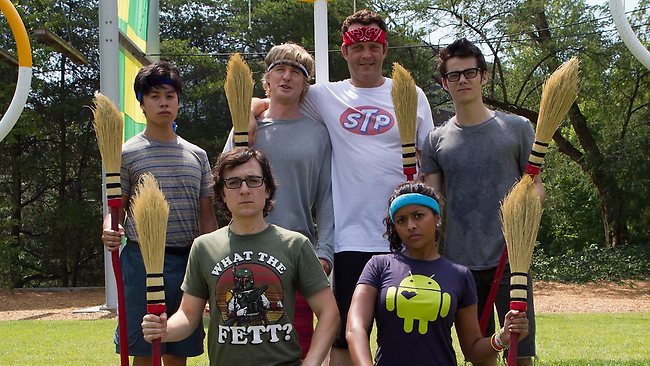
Real internships usually involve more coding and less Quidditch. Usually.

Why Get an Internship?

Why should you get a summer internship? Summer classes can be useful, and studying abroad can be a great learning opportunity.

However, an internship gives you a glimpse of what it’s like to work as a software developer. If you enjoy your internship, you can be confident in continuing to study computer science. Or if you find yourself a bad fit, you can change majors earlier rather than later. Plus, having an internship will make the post-graduation job search easier. Students with an internship under their belt often receive job offers during their senior year.

In addition, software interns get paid anywhere from $15 to $40 an hour (much better than working at Willie’s Burger House). Some even provide housing, transportation stipends, and a host of other benefits. And if you’d like to spend the summer in San Francisco, Austin, New York, Seattle, or another technology hub, you’re in a great position.

The First Step: Personal Projects

An early prototype of PEACE, one of my personal projects on GitHub.

One of my favorite projects is a 2D Java game I wrote just for fun.

Here’s the first step towards getting a CS internship: Open a GitHub account (it’s free!) and upload the source code for one of your coolest projects. If you don’t have any outside-of-school programming projects, make one.

Why? Because recruiters love to see (and talk about) personal projects.

Personal projects, like a hackathon program or a just-for-fun mobile app, show recruiters that you know how to code and are passionate about programming. Even a small program can showcase your skills.

Also, imagine the following conversation:

Recruiter: So, tell me about one of your favorite projects.

You: Uhh, I haven’t really programmed much outside of class.

Compared to the following:

Recruiter: So, tell me about one of your favorite projects.

You: I made an app that does [really cool thing]. It was awesome because [insert details here].

Recruiter: Wow, that sounds impressive! I’d love to see the source code. Do you have an online portfolio?

You: Of course! You can find it at github.com/sheldonsandbekkhaug. Here, let me write that down for you.

GPA might get you an interview, but personal projects will get you the job. A high GPA is great, but for many engineers, talking about your just-for-fun programs will remind them about their days hacking away at a passion project. Show them that you’re skilled and passionate, and they’ll mark you down as ready for an internship.

What kinds of personal projects do you showcase on GitHub?


If you’d like me to review your GitHub (or other kind of) portfolio, post a link in the comments below!

Posted in CS Internship Guide, Software | Tagged , , , , , , | 7 Comments

How To Put Virtual Reality in Every Home

FullDive Wear

Meet FullDive, the ambitious startup with the potential to put virtual reality in every home. Their idea consist of two main parts: a $29 headset and a free software platform.

“We believe that VR is the next big platform for entertainment,” says Jovian Chen, vice marketing lead at FullDive. Products like the Oculus Rift and Microsoft Hololens have drawn interest in virtual reality technology, but there no ocean of content awaiting VR users.

“In order for the VR industry to really take off, headsets need to be sold at a reasonable price,” continues Chen. Anyone can pre-order the FullDive Wear for $29 (or purchase for $49 upon release). Insert an Android or iPhone and receive a high-quality virtual reality experience for everyday entertainment. Optionally, you can use the FullDive Wand to interact with your VR apps, many of which are provided free, and future video games.

Along with the hardware, the company has built a software platform where developers can sell VR applications. Android devices (and soon, iPhones) can download the FullDive platform just like any other app. With over 140,000 downloads, 1700 reviews and an average rating of over 4 stars, FullDive’s platform provides a well-liked “ecosystem” for VR experiences.

FullDive_Headset_Front_ViewWill FullDive win out against other virtual reality devices? Facebook and Microsoft have poured an enormous amount of money into their projects. The startup faces an uphill battle attracting independent developers to its ecosystem.

FullDive Wear is scheduled for release in March 2016. The company is currently accepting pre-orders on their website.

Learn more at FullDive.com.

Posted in Startup, Startup Spotlight | Tagged , | Leave a comment