Why It’s Good to Get Punched in the Face

What Reality Loves to Do to Plans

Reality loves to punch everyone and everything in the face. Especially plans. Huge plans, grandiose plans, top-down designs, pages of words, charts, diagrams, jargon, tables, mountains of data–all that no one will ever read.

These sorts of plans are doomed before they even start. Why? These plans founded on assumptions that no one has validated (yet). So no one knows whether these plans are fragile or robust.

Breaking Bad (Plans)

Fast feedback is a necessity. The whole idea around the minimum viable product (MVP) is to get fast feedback and adjust course accordingly. It’s far better to break a quick MVP than to find out your five-year project was fragile all along.

People playing a board game with index cards

An MVP can be simple as a deck of cards, a pen, and paper.

Building an MVP isn’t always easy. However, a bit of creativity can go a long way. Instead of spending months perfecting a 3-D model, my team built a prototype out of PVC pipe in a matter of hours.

For software projects, an MVP may be a hacky prototype of a new feature. Your million-dollar idea could start out as post-it notes that simulate a user interface. Other times, it could take the form of a single button that, when clicked, reveals the text “Coming Soon.”

In the early stages, fast feedback is more important than perfecting your product. Next time you want to refine your plan before showing anyone, consider building an MVP and seeing how it reacts to Reality (capitals intentional) punching it in the face.

What’s creative MVPs have you seen?

Posted in Software, Startup | Tagged , , | 3 Comments

Why Snapchat is Worth 20 Billion Dollars

Why does Snapchat (and other stupidly viral apps) valued at billions of dollars? They have almost no revenue, so why do investors pour money into them? The secret is in one word:

USERS

For investors, a large user base is assumed to equate with eventual revenue. Either Snapchat will generate boatloads of cash through ads and data collection, or it will be sold to a major company like Google or Facebook.

Snapchat makes little revenue, yet investors think it's worth billions.

Snapchat makes little revenue, yet investors think it’s worth billions.

In their eyes, the number of people using the app is more important than what the app does. Will the next viral hit be AirBnB for fish, Twitter for video games, or something else? Whatever it is, I think that at least one big player will consider acquiring it.

Only time will tell if the investment money will dry up after the next crash. Ventures that create real value and real money will probably survive, while the get-rich-quick apps will have a tougher time competing for investment money.

Am I discouraging you from starting a new venture? Absolutely not! If you have a great idea, go for it. Get out there, validate the market, and build a prototype. Just don’t expect to make a million dollars overnight, ok?

What do you think about viral apps like Snapchat? Are they worth as much as investors think?

Posted in Startup | Tagged , , , | 2 Comments

The Skills We Forgot

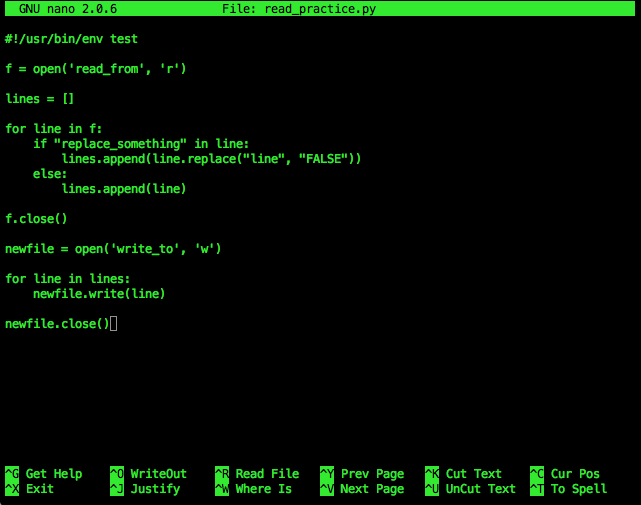
Terminal text

Maybe tests focus too much on technical skills and not enough on soft skills.

I think “soft skills” are just as important as technical skills, even for engineers.

Recently, one of my friends shared an article showing that students in STEM fields (science, technology, engineering, mathematics) are smarter than majors such as education, journalism, agriculture, and business. Even as a computer science major, I was immediately skeptical of the article’s findings.

The tests referenced in the article can’t qualitatively rank how “smart” a person is (if such a thing can be measured). Naturally, students trained in analyzing questions (engineers) will perform better when asked to compute, say, the derivative of a logarithmic function. More importantly, the tests did not measure soft skills, such as empathy, creativity, communication, charisma, or leadership.

Software development is a team activity. Everyone knows that development teams need to communicate clearly, but how often is that tested in classrooms?

I think that soft skills are tested implicitly. Implicit tests include daily activities, such as reading a classmate’s body language, writing an email to a professor, and empathizing with teammates. Unfortunately, soft skills cannot be extensively tested in interviews (or if they are, they rarely give the complete picture).

I don’t think testing soft skills will automatically solve problems. Soft skills can’t be easily tested, nor do I think more testing will automatically make students better at “creativity.”

My point is this: although soft skills are not explicitly tested, they’re just as important to engineers as technical knowledge.

Do you think universities or companies focus too much on technical skills? Or do you think it is fitting that technical skills are more widely-tested?

Posted in Software | Tagged , , | 2 Comments

Three Things I Learned Playing Video Games

“Only Losers Care About Winning”

I’m not talking about my time playtesting my work at Multimedia Games. This is about what I learned with a controller in my hands. When I was younger, I played video games every week. For a time, I even wanted to be a game developer. Though I rarely play video games anymore, I had a ton of fun and learned a few things.

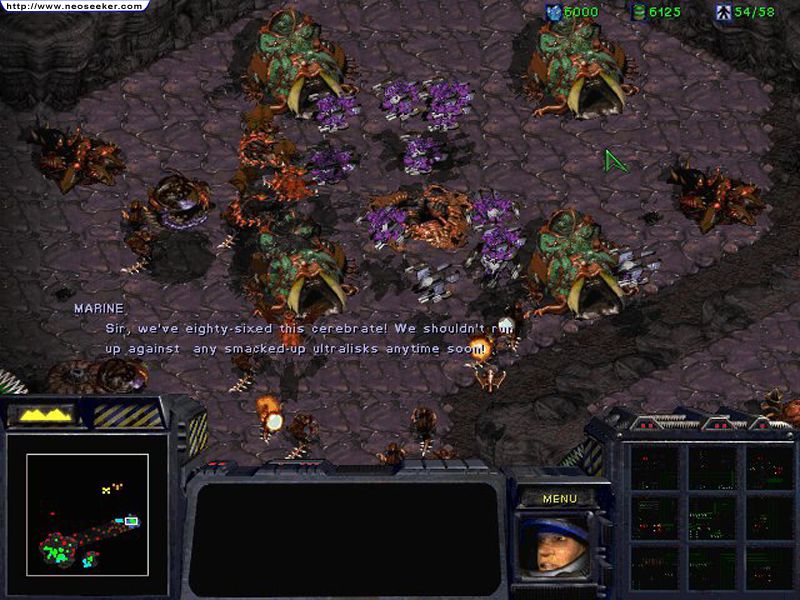
StarCraft: Brood War

StarCraft: Brood War, one of my favorite games. (Source)

1. Work before Play

When I was young, I played StarCraft over the Internet. It was wonderfully fun, but you needed other players to be online at the same time. The servers were pretty quiet before 4pm, so I learned to do my chores (which were eventually unavoidable) earlier in the day. This let me devote more time to StarCraft in the evenings.

2. Can’t Win Alone

Later, when I played League of Legends, I found it difficult to “carry” the team to victory by myself. Sometimes, when we performed terribly, some players would angrily blame the other team members. I thought it was a better idea to keep a good attitude and encourage my teammates. After all, I can’t win alone.

3. Diamonds Don’t Matter

Only losers care about winning. No matter how great you think you are at a game, you will eventually stop playing it. You can be a “diamond tier” player, but outside of the video game, your rank doesn’t matter. I aim to win, but if I lose, I don’t care. It was a fun experience either way.

Have you ever learned anything by playing games?

Posted in Psychology | Tagged | 1 Comment

How One Company Eliminated Critical Deadlines

At MGAM, developers

At MGAM, developers “decorated” the boss’s office for his birthday. Truly a fun place!

The summer after I interned at Calxeda, I worked as an intern at Multimedia Games (a.k.a. MGAM). Since I wanted to be a game programmer during high school, this was my chance to see what the industry was like. For instance, video game companies are stereotyped as having tons of work for little pay. Would MGAM be like that?

Spreading the risk

Multimedia Games doesn’t put all their eggs in one basket, so there are no critical deadlines that could damage the entire company. (And therefore, there’s no huge ramp-up as the entire company prepares for the release of the year.)

What do I mean by this? Imagine you’re a stock trader. Would you rather bet all your money on a single company, or spread your resources among a large number of stocks?

If Multimedia Games had a hundred dollars to buy stocks, they would put one dollar on a hundred different companies. Instead of developing one massive game each year, they create dozens of small titles.

I think this behavior makes them incredibly robust.

When other game companies invest heavily in one massive game, they become fragile. If their single project gets delayed, the entire company is at risk. At Multimedia Games, no single title makes up a huge portion of the company’s revenue. Furthermore, by producing a variety of games, they have more opportunities to produce a hit.

This also means there’s no ramp-up in workloads just before the game is released. No deadline is critical. Yes, there is a small increase at MGAM near individual milestones, but the whole company is not working past midnight to finalize the monolithic project. Only one team out of many needs to stay late, and its rarely as much as a 60-hour workweek.

Personal Thoughts on the Internship

During my time at Multimedia Games, I had fun, made new friends, and learned a ton. They truly have a friendly, casual atmosphere. But by the end of the internship, I knew game development wasn’t for me. The next year, I interviewed with a variety of companies, and chose to intern at a technology consulting firm. Additionally, I attended 3-Day Startup and became involved with the Austin startup community.

Have you developed video games or worked at a video game company? What did you think?

Posted in Software | Tagged , , , , , | Leave a comment